Definition
Casing storage is the set of conditions, temperature, salt cover and closed packaging, under which salted natural casings are held between arrival and preparation. Salt does the preserving; storage keeps the salt doing its job. Everything below is generally accepted industry practice with typical values; the product datasheet for the casing you hold takes precedence.
Three conditions
Temperature
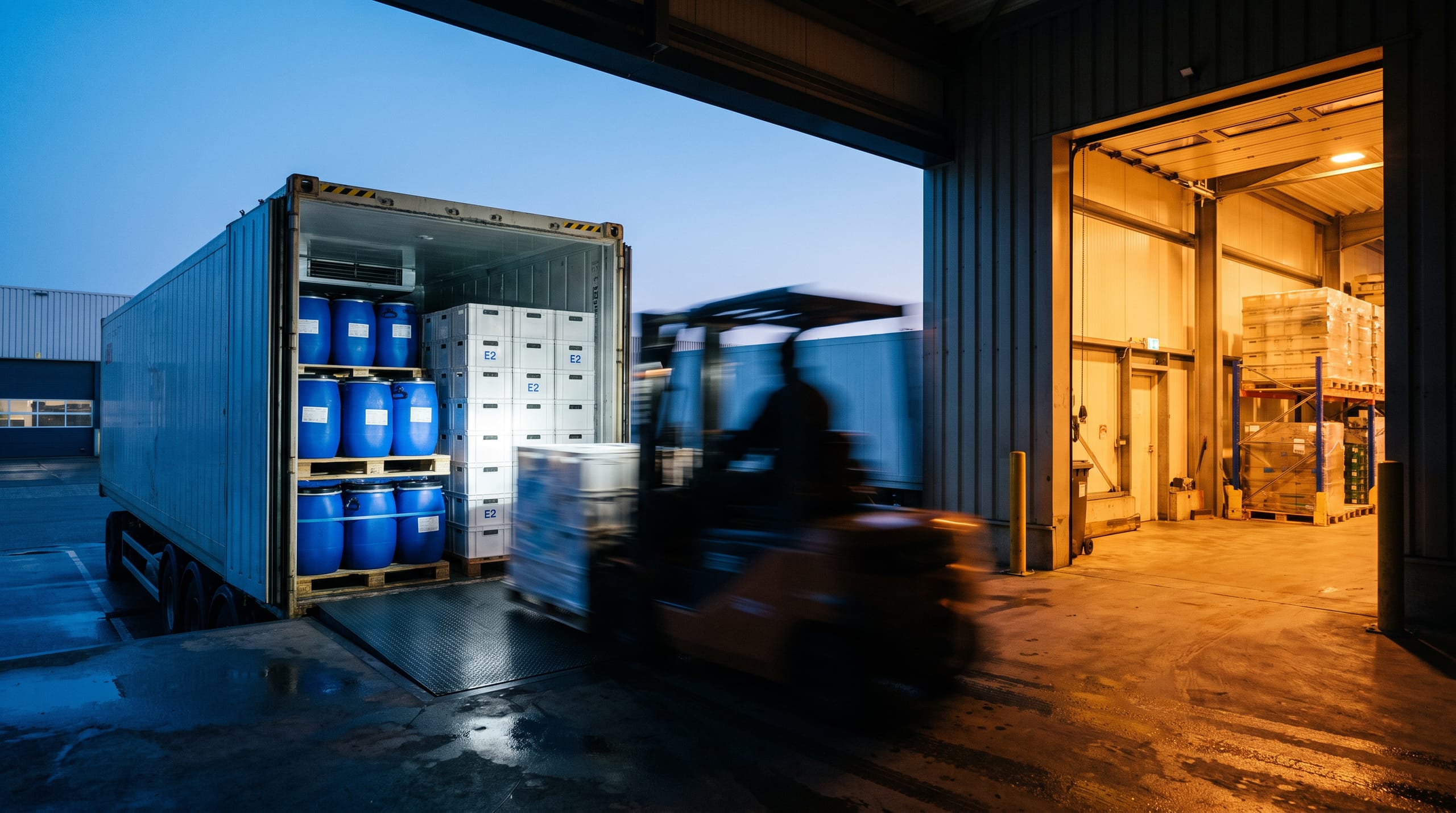
The generally accepted range for salted natural casings is 0 to 10 °C. Many suppliers and customers work to a narrower band within that range, and the datasheet for a specific product states the figure that applies. The lower end slows any residual microbial activity; the upper end is where quality begins to decline over weeks and months. Store barrels, E2 crates and buckets in a dedicated cold store, log the temperature and keep casings away from products with strong odours, which the casing will absorb.
Salt cover
A dry-salted casing is preserved because the salt keeps the water activity in the wall low. That only holds while the casing is in contact with salt. Casings on the top of a barrel that have been left uncovered dry out, discolour and become brittle. When a container is opened, the casings that remain must be pushed back under the salt layer, and dry salt added if needed, before the lid goes back on. Soft tubes are kept in brine for the same reason: the brine must cover the tubes at all times.
Closed containers
Air dries the surface of a casing and lets odours in. Barrels, buckets and E2 crates arrive sealed and should stay sealed until the day the contents are needed. After opening, close the lid tightly; a loosely covered barrel in a cold store still dries out over a few weeks.
Shelf life
Under the three conditions above, dry-salted bundles and easy fill casings typically remain usable for a year or more. The datasheet gives the shelf life and the label gives a best-before date per lot. Soft tubes in brine have a shorter shelf life because the casing has already been desalted and rehydrated; the datasheet states the period and it is shorter than for salted casings. Shelf life is a supplier statement about unopened product stored as specified. It is not a guarantee once the container has been opened or the cold chain has been interrupted. Rotate stock first in, first out and record the lot number of each unit you open; the lot number is what links a barrel to its origin plant under Teijsen’s traceability system.
Handling opened barrels and crates
- Open one unit at a time. Take out the hanks or ends for the shift and no more. See how to prepare natural casings for what happens next.
- Re-cover. Push the remaining casings under the salt. If the top layer is exposed, add clean, dry salt until it is covered.
- Close and label. Put the lid back on tightly, mark the unit as opened with the date, and return it to the cold store.
- Use opened units first. An opened barrel is used before an unopened one, regardless of best-before date, within the time your HACCP plan allows.
- Never return prepared casings. Soaked or rinsed casings do not go back into the salted stock. Keep them in fresh water at the line and use them within the shift.
Soft tubes: a separate regime
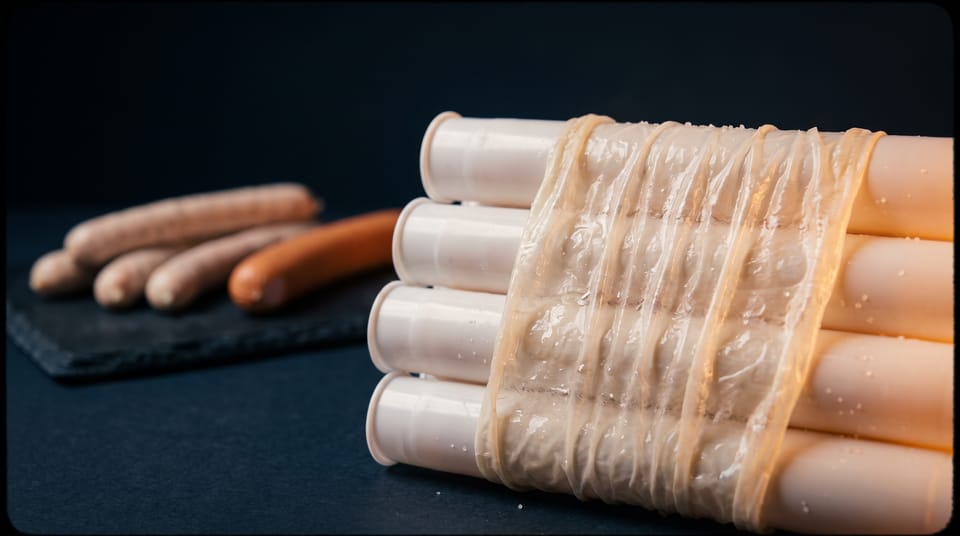
Soft tubes are casings that have been desalted, rinsed, shirred onto flexible tubes and packed in brine. They need colder discipline than salted bundles for three reasons. First, the preservation comes from brine and temperature, not from dry salt, so a warm spell affects them faster. Second, they must not be frozen: ice crystals puncture the casing wall, and a tube that has been frozen bursts repeatedly at the stuffer. Third, the brine must cover the tubes; an opened bucket is closed again with the tubes submerged. Keep soft tubes in the refrigerated range stated on the datasheet and plan deliveries so that stock turns over within the shelf life. Read more in soft tubes versus salted bundles.
Transport and arrival
Teijsen ships salted casings from Zeewolde in full container loads, in barrels, E2 crates or buckets, and checks every lot before the container closes. On arrival, move the goods into the cold store without delay, check that the containers are intact and sealed, and record the lot numbers. A container that has stood in the sun at a port is the most common reason for a product arriving warmer than specified; if the temperature on arrival is outside the datasheet range, note it on the delivery documents and inform your sales contact.
Quick reference
| Make-up | Typical storage temperature | Preservation | Shelf life (typical) | Freezing |
|---|---|---|---|---|
| Salted bundles in nets | 0 to 10 °C per datasheet | Dry salt cover | A year or more | Not recommended |
| Easy fill in E2 crates | 0 to 10 °C per datasheet | Dry salt cover | A year or more | Not recommended |
| Soft tubes in buckets | Refrigerated per datasheet | Brine cover | Shorter; see datasheet | Never |
Check the product datasheet for every figure in this table before writing your own procedure. Datasheets for hog casings, sheep casings and beef casings are on the downloads page, and your sales contact can send the storage specification with any sample.
Last updated: 5 October 2026