Knowledge base

Natural casings, explained for the people who fill them.

Your sausage. Our case.

Calibres, species, make-ups, preparation and storage. Written by the Teijsen sales and production team for buyers, production managers and operators.

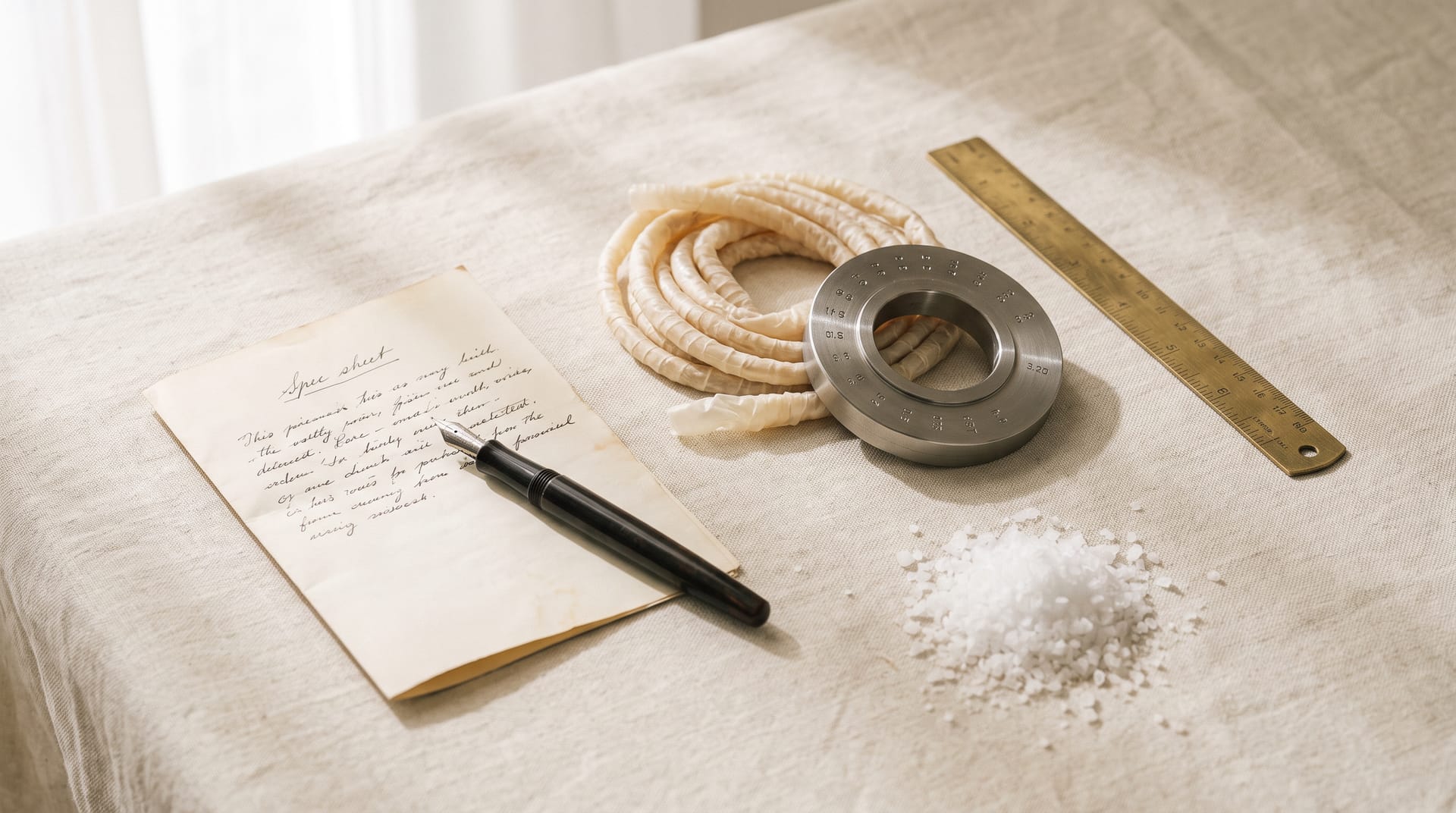
Calibre diagram of natural casings on parchment-coloured paper next to a measuring gauge

In short

The Teijsen knowledge base explains natural casings in practical terms for sausage producers, buyers and line operators.

Seven articles cover the questions we answer most often. What natural casings are and how they are made.

The calibre guide, with a table of calibre by sausage type and species. Hog, sheep or beef: which species fits which product. Soft tubes versus salted bundles and what each make-up means at the stuffer. How to prepare natural casings: soaking, rinsing and loading. Storing natural casings and shelf life.

And why long-end casings of 14 metres and more pay back on an automatic filling line. Every article is written by the Teijsen team, states its sources where it quotes an external fact, and links to the product page it describes.

Use it before you specify, and send it to your operators.

Knowledge base

Natural casings, explained for the production floor

Why a casings exporter publishes a knowledge base

A wrong calibre costs a day of production; a wrongly stored lot costs the lot. Most of those mistakes come from vocabulary, not from carelessness. The knowledge base fixes the vocabulary: what 32/34 mm means, why a long end matters, how a soft tube differs from a salted bundle, how long an opened barrel keeps. Buyers use it to write specifications; operators use it on the floor.

How to use it

Read in the order of your question. Choosing a species: hog, sheep or beef. Choosing a calibre: the calibre guide. Choosing a make-up: soft tubes versus salted bundles. Then the floor articles on preparation and storage. When you are ready to test, request a sample in the calibre you chose.
FAQ

Frequently asked questions

Specifications are confirmed per lot. Ask for the current datasheet.

Who writes the knowledge base?

The Teijsen sales and production team in Zeewolde, led by Sales Director Nick Fiere. The articles draw on daily selection practice in Shaoshan and on the questions customers ask us.

Where do I start if I am new to natural casings?

Start with what natural casings are, then the calibre guide. Together they explain the vocabulary (calibre, long-end, make-up) and help you write a first specification.

Can I use the articles for training my operators?

Yes. The preparation and storage articles are written as step-by-step guides for the production floor. Share the link or ask sales for a printable version.

Do the articles match your product specifications?

Yes. The calibres, lengths and make-ups in the articles are the ones on our product pages and datasheets. Where market practice differs, the article says so.

Refrigerated container at the Zeewolde loading dock at dusk, barrels and E2 crates on pallets

Samples and specifications

Ask for a sample in your calibre.

State calibre, length, make-up and sausage type. Samples ship within days and are followed up by our sales team.

Request a sample sales@teijsen.com

+31 88 666 9888 · Zeewolde, Netherlands

Request a sample