Definition
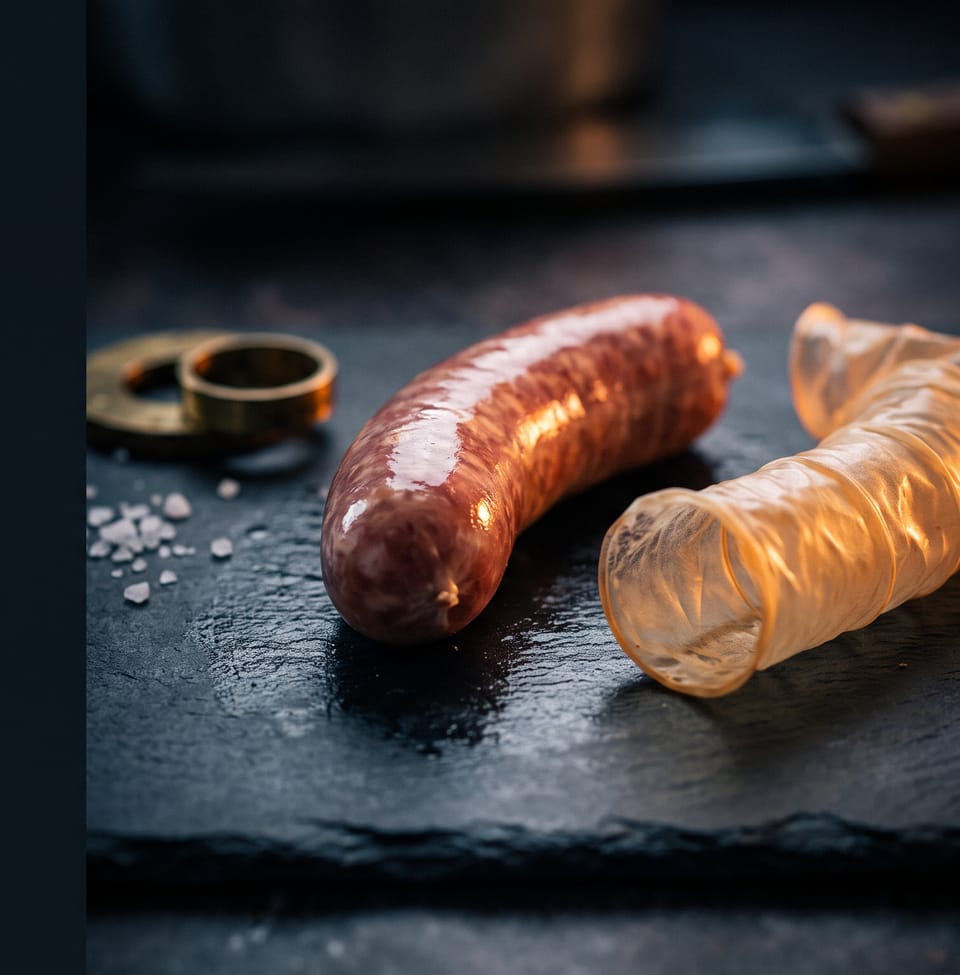
Make-up is the form in which a selected natural casing is tied, shirred or packed for delivery to the sausage producer. The casing inside is the same; the make-up changes how much work remains at the stuffer, how the product keeps and how it travels.
The four options
Salted bundles in nets
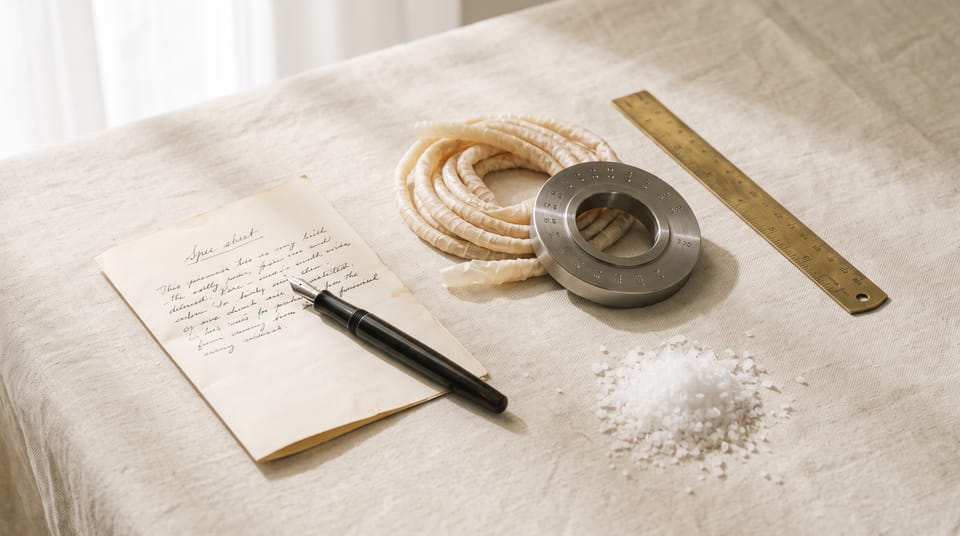
A salted bundle, or hank, is a measured length of casing, tied at one end, dry-salted and packed in a net. Hanks of a stated total length (for example 91 metres, the traditional 100 yards, or metric equivalents) are packed in barrels or buckets. This is the oldest make-up and still the most common for hog casings and beef casings.
Advantages. Longest shelf life of any make-up, typically a year or more under datasheet conditions; lowest cost per metre; compact, so the most metres per container; suits hand-linked and semi-automatic lines; easy to repack after opening.
Disadvantages. The operator must desalt, soak, rinse and thread each end onto the horn, which takes minutes per hank. Short ends in a hank mean more reloads. See the preparation guide for typical soaking ranges.
Soft tubes
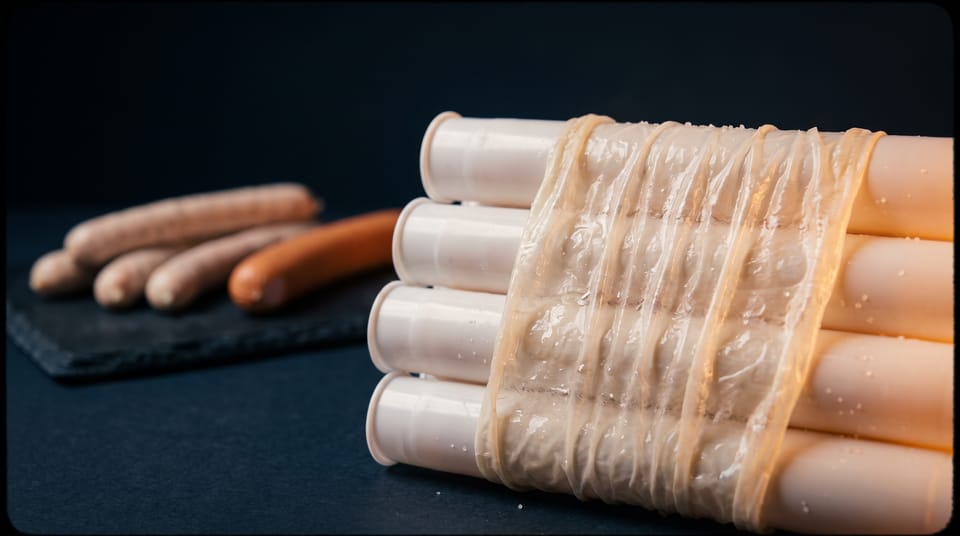
A soft tube is a flexible plastic tube onto which a single long casing has been shirred like a concertina. The casing has been desalted and rinsed before shirring and is packed in brine in buckets. At the stuffer the operator slides the tube over the horn, pulls the casing off and starts filling. This is the standard make-up for sheep casings and the preferred make-up for XXL hog casings on automatic lines.
Advantages. Loading takes seconds instead of minutes; no threading of a wet casing; little or no soaking; one end per tube, so the length per tube (7, 10, 13 or 16 metres and more for sheep; 14 metres and more for XXL hog) runs through without interruption. A customer in Finland reports that the 14 m+ hog casings on soft tubes work fantastically in their automatic filling line.
Disadvantages. Shorter shelf life than dry-salted casing; must be kept chilled and must not be frozen; higher cost per metre because of the extra processing; more volume per metre in the container; the tubes are single-use plastic unless returned.
Easy fill in E2 crates
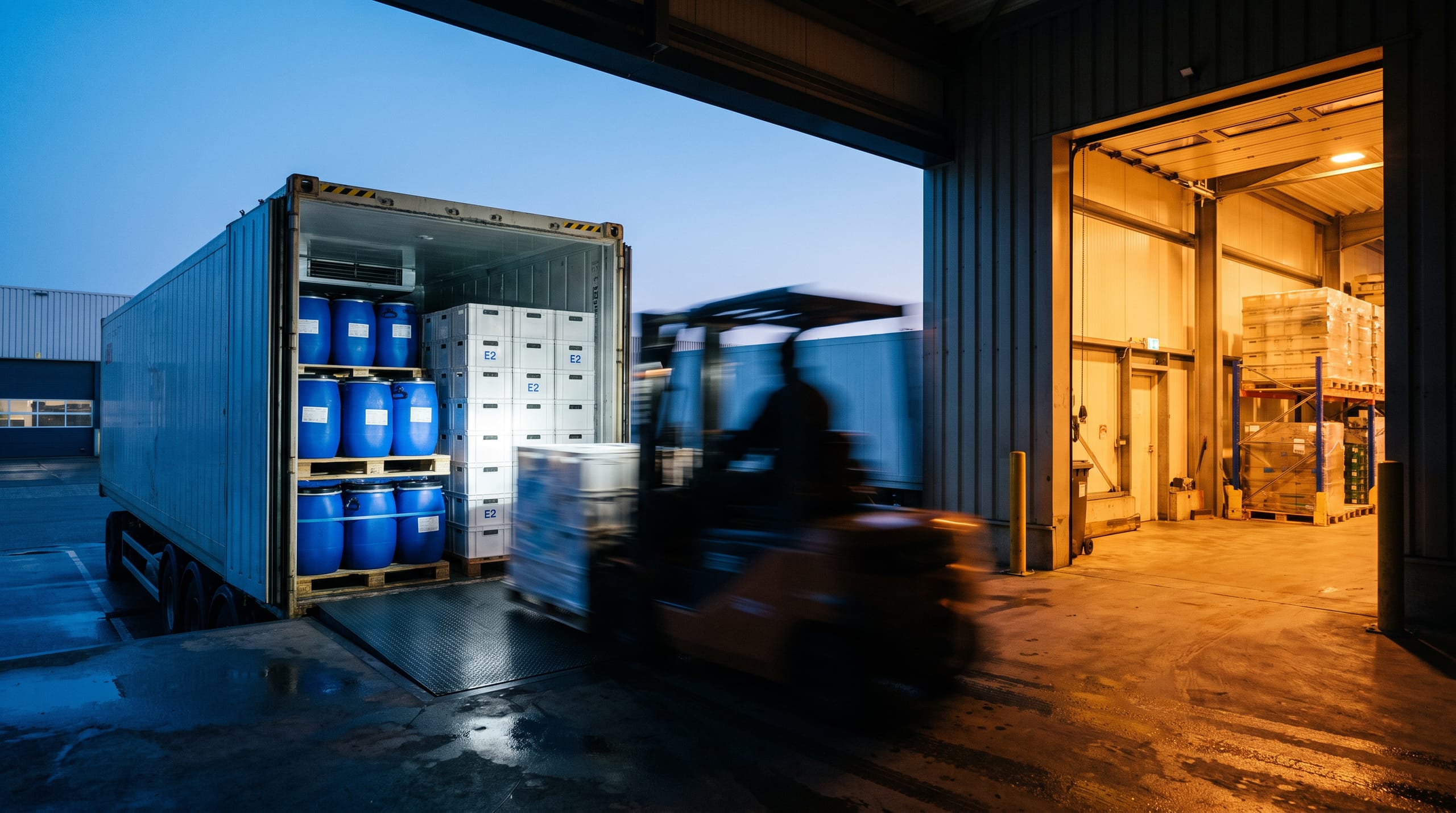
Easy fill packs selected, salted casings loose and sorted in standard E2 crates rather than tying them into hanks. The operator takes one end after the other from the crate.
Advantages. No untying; faster loading than hanks; shelf life close to salted bundles; E2 crates stack and travel well; suits high-volume lines that get through many ends per shift.
Disadvantages. The casing is still salted and needs desalting and soaking; more volume per metre than hanks; the crate must be kept covered and chilled once opened.
Pipes
Pipes are rigid tubes onto which a casing is shirred for specific stuffers and linkers that are designed around them. They behave like soft tubes at the machine but suit a narrower set of equipment. Ask whether your stuffer supplier specifies pipes before ordering.
Comparison
| Criterion | Salted bundles | Soft tubes | Easy fill (E2) | Pipes |
|---|---|---|---|---|
| Loading time per end | Minutes | Seconds | Under a minute | Seconds |
| Rinsing and soaking | Full desalting and soaking | Short rinse per datasheet | Full desalting and soaking | Short rinse per datasheet |
| Shelf life (chilled) | Longest | Shorter; do not freeze | Long | Shorter; do not freeze |
| Cost per metre | Lowest | Higher | Low to medium | Higher |
| Container volume per metre | Lowest | Highest | Medium | High |
| Best suited to | Hand and semi-automatic lines, beef | Automatic lines, sheep, XXL hog | High-volume salted use | Specific stuffers |
All figures are typical for the industry; the product datasheet gives the values for a specific Teijsen product.
How to choose
- Count your reloads. Note how many ends your line loads per shift and how long each takes. If loading time is a visible share of the shift, soft tubes or easy fill pay back in labour alone.
- Check your cold chain. Soft tubes need uninterrupted chilled storage and must not be frozen. If storage is shared, unreliable or far from the line, salted bundles are more forgiving. See storing natural casings.
- Look at length class. The benefit of soft tubes multiplies with long ends; see why long-end casings pay back. On a hand-linked line with standard lengths, hanks remain the economical choice.
- Consider the container. Hanks ship the most metres per full container load, soft tubes the fewest. For a distant market the freight share per metre is part of the comparison.
- Test. Order the same calibre in two make-ups and run both for a shift. Samples ship within days.
Teijsen produces salted bundles in nets, soft tubes and easy fill as standard, and other specifications on request. Every make-up is checked in Zeewolde under IFS Food Higher Level before the container closes; see the quality page.
Last updated: 5 October 2026